


When spectators watch a skilled kite team perform, they often see smooth formations, perfectly synchronized turns, and seemingly effortless precision. What they rarely see is the training that happens before a single kite is launched.
One of the most valuable training methods in team flying is something known as stick practice.
What Is Stick Practice?
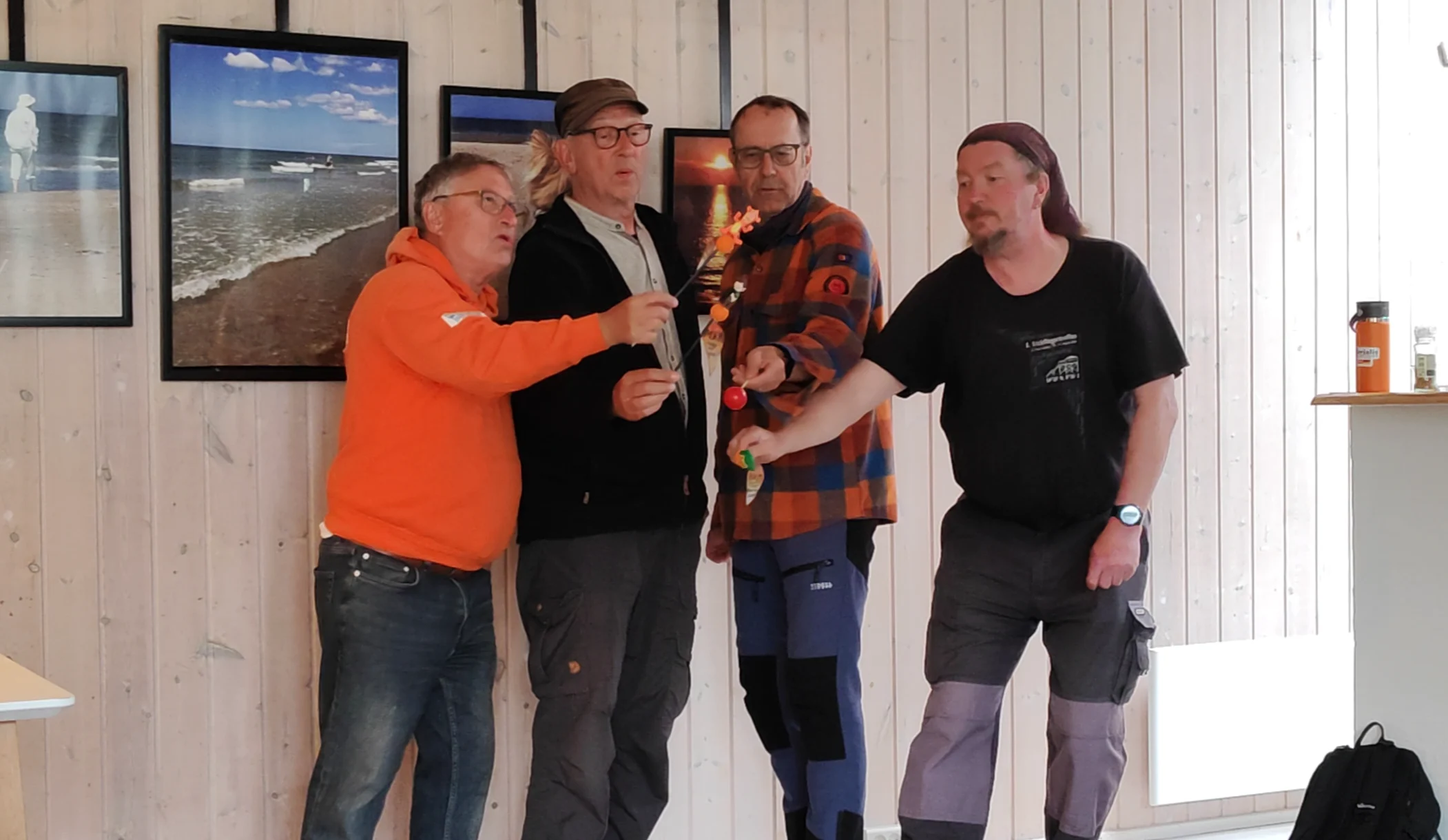
Stick practice is a ground-based training technique used by kite teams around the world to rehearse routines, formations, and timing. Instead of flying actual kites, each pilot holds a simple practice stick—typically a wooden dowel or spare kite spar—with a small paper kite attached to one end and a string loop representing the flying lines. Pilots stand in their normal flying positions and move the sticks exactly as they would fly their kites in the sky. (Kite Plan Base)
Although it may look simple to an outsider, stick practice is one of the most effective tools available for developing team precision.
Building Muscle Memory Before Launch
The human brain learns movement patterns through repetition. Just as musicians rehearse scales and athletes perform drills, kite pilots can develop muscle memory without ever touching a flying line.
By repeatedly moving the practice sticks through a routine, pilots train their bodies to execute turns, stops, corners, and transitions automatically. This allows the team to focus less on individual movements and more on overall synchronization when they finally launch their kites.
The concept is similar to how trainer kites are used in kitesurfing education, where repeated practice develops steering skills and muscle memory until movements become instinctive. (Kitesurfing Academy)
Perfecting Timing and Positioning
In team flying, timing is everything.
A formation that looks perfect on paper can quickly fall apart if one pilot turns a fraction of a second too early or too late. Stick practice allows teams to identify these issues immediately.
Because everyone is standing in their normal flying positions, pilots can visualize how the routine will unfold in the sky. Leaders can adjust timing, spacing, and commands before wind conditions ever become a factor. Teams can stop, discuss, and repeat difficult sections within seconds.
This dramatically reduces the amount of field time needed to develop new routines. Experienced teams often work through entire sequences on the ground before flying them for the first time. (Kite Plan Base)
Understanding Line Management
An often-overlooked benefit of stick practice is learning line management.
As pilots rotate their practice sticks, they can see how twists would accumulate in the flying lines during a routine. This helps teams identify potential problems before they occur in the air and teaches pilots how specific maneuvers affect line orientation. (Kite Plan Base)
For complex routines involving wraps, crosses, and close-proximity flying, this knowledge can save countless hours of troubleshooting on the field.
Communication Training
Stick practice is not only about movement—it is also about communication.
Teams can rehearse verbal commands, count sequences, and leadership calls while standing comfortably on the ground. This allows every pilot to understand exactly when and why a maneuver happens.
The result is greater confidence in the air and a stronger sense of teamwork. By the time the kites are launched, the routine has already been flown dozens of times in everyone’s mind.
Why Every Team Should Use Stick Practice
Whether you are flying as a pair or as part of a large demonstration team, stick practice offers enormous benefits:
- Develops muscle memory without needing wind.
- Improves timing and synchronization.
- Allows rapid rehearsal of new routines.
- Helps visualize formations and transitions.
- Reveals potential line-twist issues.
- Strengthens team communication.
- Saves valuable flying time on the field. (Kite Plan Base)
The AERIALIS Perspective
At AERIALIS Team Flyers, stick practice has always been an essential part of preparing for displays, festivals, and competitions. A few simple sticks, a bit of imagination, and a group of dedicated pilots can transform a rough idea into a polished performance long before the first launch.
The next time you see a kite team carving elegant patterns across the sky, remember that much of that precision was probably created while standing on the ground with nothing more than a few sticks in hand.
Sometimes the most important flying happens before the kites ever leave the ground.
This version is written as a blog article suitable for a kite-flying audience and optimized for both readability and SEO.