


My filming setup is built around three simple, reliable tools:
- a GoPro camera
- a tripod
- a power bank
That’s it. No crew, no second takes—just me, the kite, and whatever the conditions decide to give.
This stripped-down approach isn’t just a preference—it’s a necessity. I do almost all my filming solo, which means every piece of gear has to earn its place.
The Camera: My Eyes in the Sky
At the center of everything is the GoPro—small, rugged, and incredibly versatile.
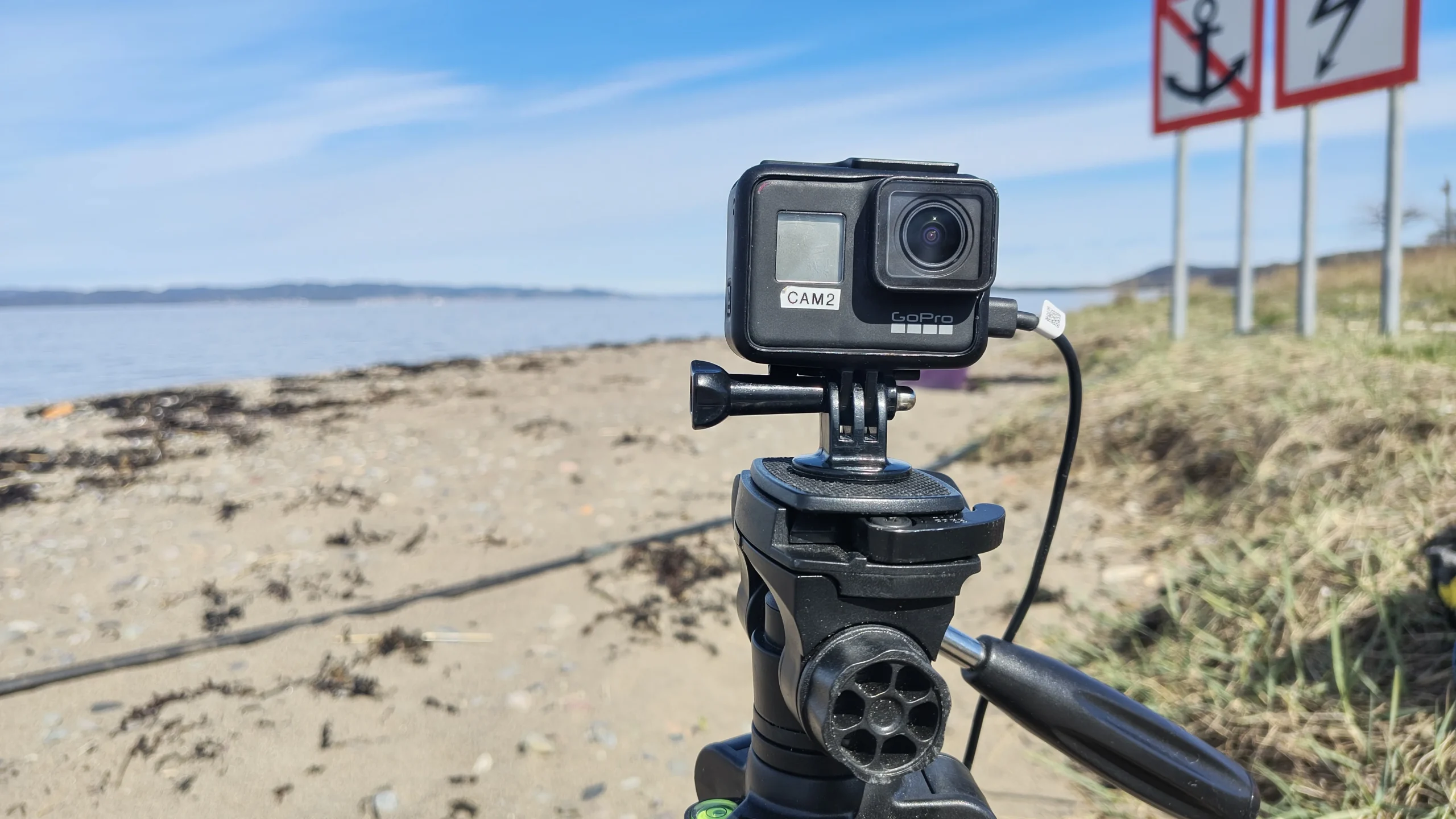
An action camera like this is perfect for kite filming because it can handle wind, sand, and unpredictable environments without complaint. More importantly, it captures quality footage in situations where you don’t have time to fiddle with settings.
When I’m flying and filming at the same time, I rely on:
- A reasonably wide-angle capture to “get everything” in the frame
- Stabilization to smooth out wind-induced shake
- Set-and-forget operation
The camera becomes my second set of eyes. I frame the shot, hit record, and then trust it to do its job while I focus on the kite.
The Tripod: Stability and Independence
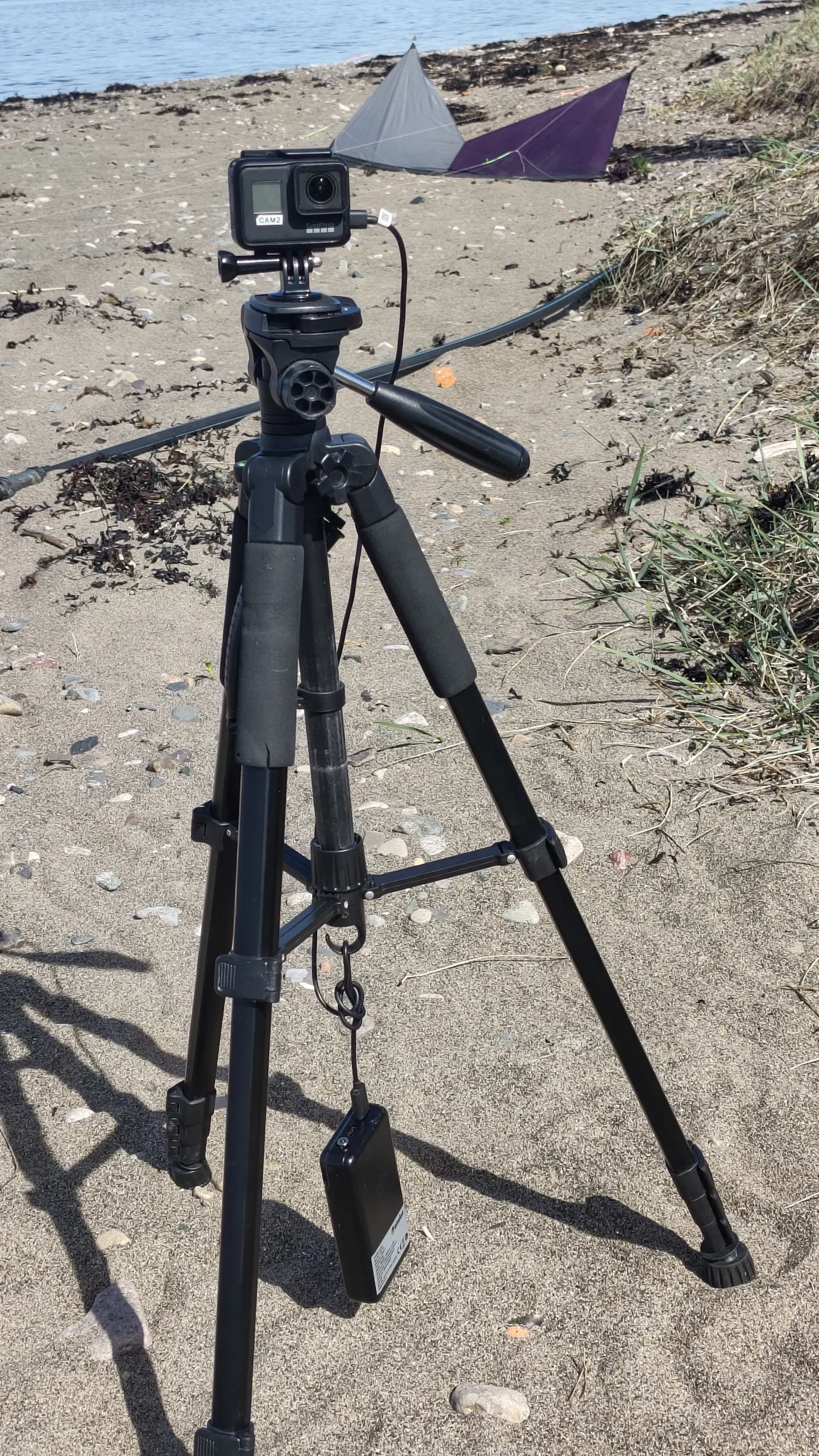
A tripod might seem basic, but for solo filmmaking, it’s essential.
Without a tripod, I’d constantly be juggling between flying and filming, which doesn’t work. The tripod gives me:
- A stable, fixed perspective
- Hands-free operation
- The ability to compose shots before launching
Many tripods – like mine – are designed to be lightweight and portable, making them ideal for outdoor shooting where mobility matters.
In practice, I set up the tripod, frame the scene, and let the camera roll while I move freely with the kite. It’s pretty much the closest thing I have to a second cameraman.
The Power Bank: Time Is Everything
Battery life is the silent killer of good footage.
A typical action camera battery lasts around 1–2 hours, depending on settings. That’s nowhere near enough for a proper kite session, especially when conditions are unpredictable.
That’s where the power bank comes in.
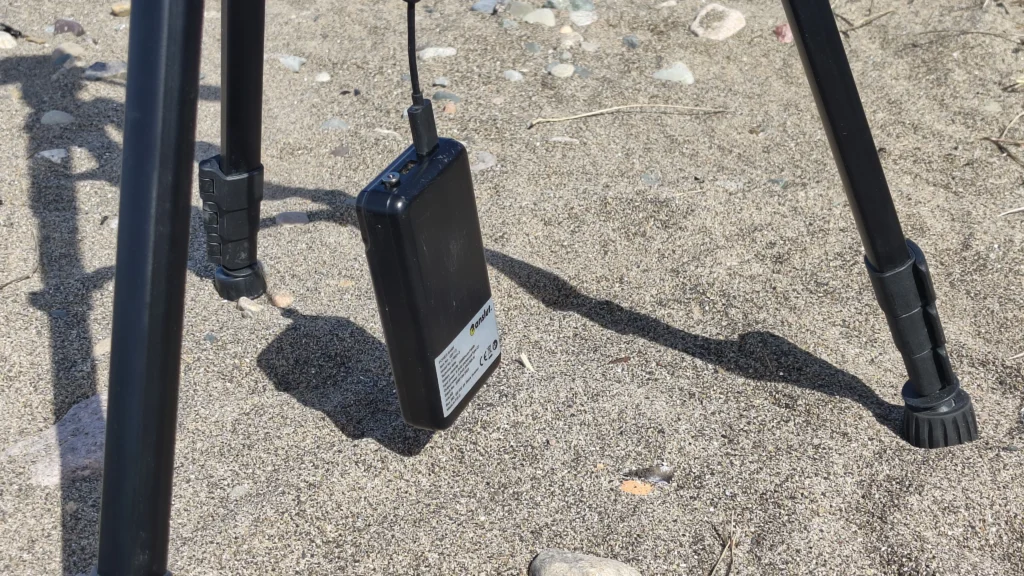
By running the camera off an external power source, I can:
- Film continuously for long periods of time
- Capture long, uninterrupted sequences
- Avoid missing “the moment” because of a dead battery
For me, this isn’t a luxury—it’s the difference between coming home with usable footage or nothing at all.
Solo Filmmaking: The Real Challenge
Filming alone changes everything.
- There’s no one to adjust framing.
- No one to hit record.
- No one to tell you if the shot works.
So the gear has to compensate.
This three-part setup allows me to:
- Set up quickly
- Stay mobile
- Focus on flying while still capturing usable footage
It’s a balance between control and letting go. You prepare as much as possible… and then trust the process.
Final Thoughts
My “to-go” hardware setup is intentionally simple:
- GoPro → captures everything, reliably
- Tripod → gives me stability and freedom
- Power bank → ensures I never miss the moment
Together, they form a lightweight, dependable system tailored for solo kite filmmaking.
Because when you’re out there alone—with the wind, the sea, and a kite in the sky—the last thing you want is gear that gets in the way.